Structural Drying & Dehumidification in Chula Vista, CA
Extracting the water is only half the job. The restoration team dries wall cavities, subfloors, and slabs to a verified standard with air movers and LGR dehumidifiers, coastal humidity and all.
(619) 404-5959Tap the 24/7 Chula Vista dispatch line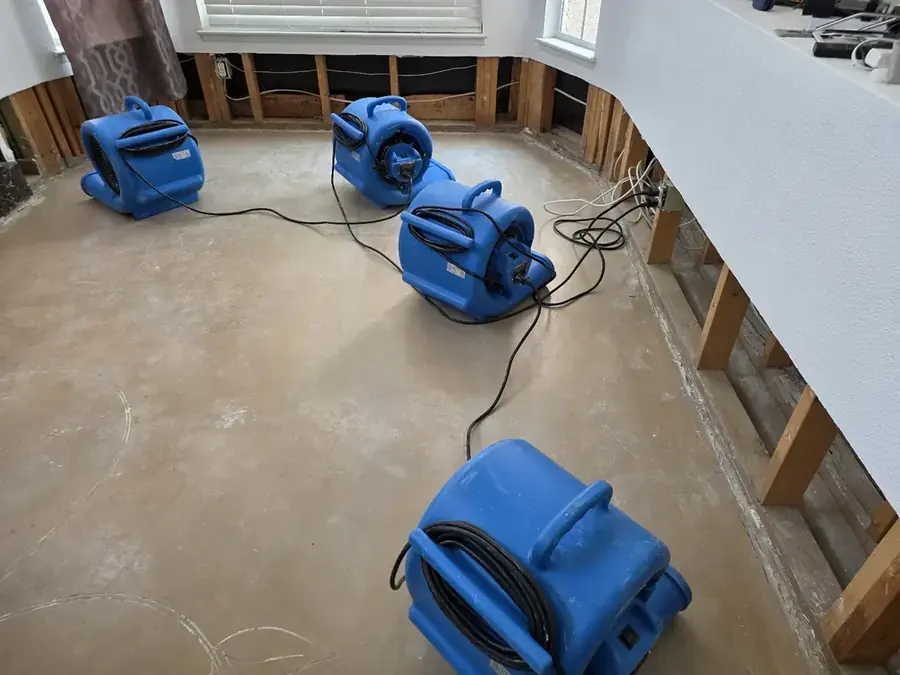
Why Chula Vista calls local water damage pros first
Rapid local response
Chula Vista water damage pros answer 24/7, and the nearest crew heads out the moment the call comes in, day or night, across the South Bay.
IICRC S500 drying standard
Trained restoration technicians with pumps, air movers, and moisture meters dry the structure to a verified reading, not a mop and a fan.
Claim-ready documentation
The restoration team documents the loss with photos and daily moisture readings, the paperwork an adjuster looks for on a water claim.
Local water experts
Coastal humidity, aging west-side plumbing, and slab-on-grade east-side tracts: local crews know how water moves in a Chula Vista home.
What to do right now for structural drying & dehumidification
- 1Do not assume a mopped-up floor means the walls and subfloor are dry
- 2Keep the affected area closed off so the drying equipment can work efficiently
- 3Leave any air movers and dehumidifiers running, do not turn them off
- 4Call the 24/7 line for a proper dry-out verified with moisture meters
What does structural drying & dehumidification cost in Chula Vista, CA?
In Chula Vista, CA, structural drying and dehumidification typically runs $900 to $6,500, depending on how many rooms are affected, whether a slab or hardwood is involved, and how many days of equipment the dry-out needs.
Minor
- Contained to one area
- Extraction and quick drying
- Clean water, caught early
Typical
- Spread across a room or floor
- Extraction, drying, minor rebuild
- Standard insurance scope
Major
- Widespread or contaminated water
- Full mitigation and rebuild
- Documented for your carrier
Want a number for your home? Try the Water Damage Cost Calculator for a Chula Vista range, then call for an exact, on-site scope.
How a structural drying & dehumidification job is handled in Chula Vista
Call and dispatch
Chula Vista water damage pros answer 24/7 and the nearest crew heads out with pumps, air movers, and moisture meters.
On-site assessment
The tech who does the walkthrough finds the source and the full reach of the water, including what soaked into slab, subfloor, and wall cavities.
Extract and dry
The extraction crew pulls the standing water first, then runs air movers and dehumidifiers to a verified dry reading, not just the surface.
Verify and document
The drying team logs moisture readings daily until the structure is dry, then documents the loss for the insurance claim.
Structural drying is the science of pulling moisture out of the building itself, the framing, drywall, subfloor, and slab, after the standing water is gone. It is where most do-it-yourself cleanups fall short, because surfaces feel dry while the wall cavity and the slab underneath are still wet. Near the coast, where the marine layer keeps humidity high, that hidden moisture lingers and grows mold, so professional drying matters even more in Chula Vista.
Why the structure holds water
Water moves into materials that hold it long after the floor looks dry:
- Drywall and insulation wick water up the wall from the floor
- Subfloor and framing absorb it and release it slowly
- A concrete slab holds moisture deep and gives it up over days
- Coastal humidity slows natural evaporation and keeps cavities damp
This is why after any extraction local crews set a real drying plan rather than relying on open windows and box fans.
How the crews dry a structure
NXPRO Water Restoration dries to a standard, not a guess:
- Map the moisture with meters and thermal imaging to find every wet area
- Set air movers to move air across wet surfaces and speed evaporation
- Run low-grain refrigerant dehumidifiers to pull that moisture out of the air
- Use targeted systems, wall cavity drying and slab mats, where water is trapped
- Take daily readings and adjust until the structure reaches a documented dry target
Drying to a verified standard is what stops mold before it starts. The EPA notes materials must dry within 24 to 48 hours, and the process follows the applied structural drying standards of the IICRC.
Was your home flooded and only mopped up? Hidden moisture grows mold near the coast. Call now for a proper dry-out, on the way fast, day or night.
Call (619) 404-5959Dry does not mean the surface feels dry
A wall can feel dry on the outside while the cavity behind it holds enough moisture to grow mold. Local crews measure moisture with meters and only call a job done when the readings, not your hand, say it is dry.
From downtown Chula Vista across the whole South Bay
Chula Vista water damage pros respond across every Chula Vista ZIP, day or night.
Chula Vista water damage pros cover the whole city, day or night, from the older west side out to Eastlake and Otay Ranch.
Coverage runs across Chula Vista, Bonita, National City, Imperial Beach, San Ysidro, and the South Bay.
See every neighborhood and ZIP covered ›Related restoration services
Structural Drying & Dehumidification questions, answered
Need help with structural drying & dehumidification now?
Do not wait for the FAQ. A Chula Vista restoration crew is standing by 24/7.
(619) 404-5959 Call nowWhat is the difference between drying and dehumidification?
Air movers evaporate moisture off wet surfaces into the air, and dehumidifiers pull that moisture out of the air so it does not just resettle. You need both working together to actually dry a structure, which is what the equipment does.
Why can't I just use fans and open windows?
Fans move surface air but do not remove moisture from the room, and open windows near the coast can let humid marine-layer air in and slow drying. Commercial dehumidifiers remove the water from the air so the structure dries and mold cannot start.
How long does structural drying take?
Most homes dry in 3 to 5 days, longer for a saturated slab, plaster, or hardwood. Coastal humidity can add time. Local crews monitor daily and stop only when the readings confirm a dry standard, rather than guessing by feel.
How do you know when the structure is dry?
Local crews take daily moisture readings with meters at set points and compare them to a dry standard for those materials. When the readings hold at the target, the structure is dry and local crews pull the equipment, with the readings documented.
Does the equipment need to run around the clock?
Yes. Air movers and dehumidifiers run continuously, day and night, because drying is a steady process. Turning them off to save on noise or power stretches the timeline and risks mold, so local crews leave them running and monitor.
Is drying covered by insurance?
Yes, structural drying is a core part of the mitigation most policies cover after a sudden water loss. Local crews document the equipment, duration, and readings.
A Chula Vista crew is standing by
Water sitting means damage spreading. Call NXPRO Water Restoration and a crew is on the way across the South Bay, day or night.
(619) 404-5959Call now, a crew picks up day or night